There is this burst of mixed emotions that you experience first time live on stage or hearing your voice through a microphone or recorded on audio/video device for the first time. Some people love it but a lot of talented people get so intimidated by this that sometimes they even don’t want to perform their music live anymore. Ever! And that’s too bad! Can we avoid that? Well, here are some tips you can try…
Your voice vs. your instrument
When you practice your instrument you have a big advantage of hearing the whole sound that your instrument produces. With some instruments like horns or acoustic guitars you maybe don’t get the “full blast” of the sound, because the sound exit hole is turned away from you, but you get a pretty good idea how your instrument sounds like.
Your voice – on the other side – is a completely different animal. A lot of our voice that WE hear and know is coming from the inside. “Of course it is coming from inside! Where is it supposed to come from?!?”
Well, yeah, our voice is coming 100% from our inside but I’m talking about the vibrations from inside our body, especially our skull. You can hear this part of the sound of your voice if you hold your ears and speak. It’s only you who can hear this part of your voice, nobody else. And exactly this part of your voice is to blame that we’re shocked when we hear our voice through a microphone for the first time. Why? Because when we speak or sing through a microphone the vibrations in our head are not loud enough to be mixed with the microphone voice so we hear only our actual voice that is coming through our mouth – and in this case: through a microphone and a speaker. And this is the sound of your voice that everybody else knows as YOUR voice – except you! Spooky, ha?!
So, what can you do?
Actually, there are a lot of things you can do but let me give you a small system first, how you should generally approach this.
You can compare it to learning how to swim. If you push a non-swimmer into a deep water you can get two results: he’ll learn how to swim (fast!) or he’ll drown. Simple. Well, not exactly! There’s a chance that he’ll learn how to swim but he’ll never go near water again because of this unpleasant experience…
The same is it with teaching kids to eat vegetables. If you put a whole broccoli in front of them the chances are slim they’re going to eat it. But if you mix vegetables with something they like, well… You get the point!
Start slowly
Let’s say you’re singer/songwriter and you’re accompanying yourself on a piano or a guitar. Take your phone/tablet and put it somewhere in the room where your instrument and your voice have the same loudness. Then go to your Voice memos or any other simple recording app (audio and/or video) and press record. Go to your instrument and sing one of the songs that you feel very confident about – the best one you have! After you’re done, take a listen. Not just once, 2-3 times. Like it? Don’t like it? Try another but don’t overdo it! One song a day, two tops, will do the job…
Next step
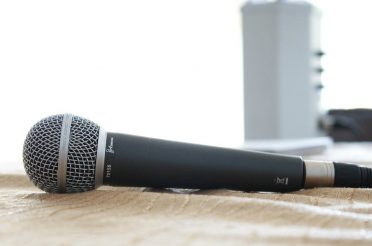
Try to sing the song through a PA system. It doesn’t have to by highly professional, a microphone to a powered speaker will do. You have to try that because your voice will sound different through a mic and a loudspeaker than it sounded recorded live in a room. In one of my past posts I wrote about the basic studio setup and mentioned Shure SM57 dynamic microphone. This one or the Shure SM58 are perfect for live voice, don’t cost that much and they’ll last a lifetime. Singing through this kind of mic is a different experience because the microphone itself and also the whole speaker system don’t provide all the frequencies – especially on the low and high end – so you will get to know another “color” of your voice. This is how your voice will usually sound at your live concerts – sometimes better, sometimes not so good, depending on the sound system and your sound engineer…
Studio recordings
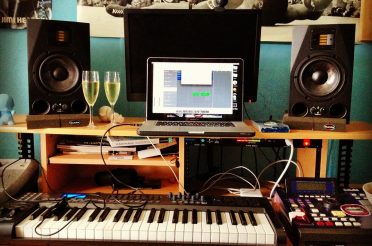
If you have a chance – or maybe even have your own homestudio – record yourself as often as you can. The studio microphones capture the full spectrum of your voice so they are the “realest” representation of how your voice really sounds. If possible use the neutral mics, preferably large diaphragm condenser microphones, but not the cheapest ones because they are often hyped in some frequencies.
This way you’ll really learn how to use your voice to express even the most subtle feelings. At the same time you get comfortable with the sound of your recorded voice which is a huge advantage later on at the actual recording sessions.
Bottom line
It all comes down to get used to hear your own voice many different ways. Some people love it right away, some people don’t. I didn’t! I have a somehow distinctive voice so it took me quite some time to get used to hear it through a microphone. And now I’m completely fine with it.
If you’re like me – don’t rush it! Take it slow, one step at the time. Get to know your voice, its sound, its fortes, it’s weaknesses, everything! And don’t hate it – it’s you! It’s YOUR voice! It’s unique and only you have it…